Description
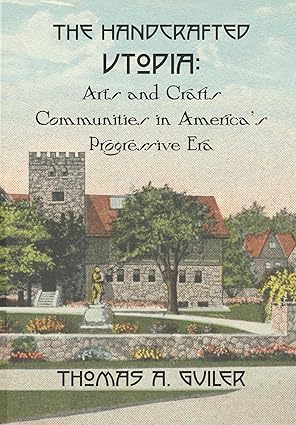
In response to the trauma of industrialization and urbanization in the late-nineteenth century, the Arts and Crafts Movement took America by storm. Art exhibits, workshops, and societies dedicated to handicraft, worker dignity, and the production of beautiful art for the masses sprouted from California to Boston. Ralph Radcliffe Whitehead, Elbert Hubbard, and William Lightfoot Price were so enamored with the movement that they decided to build entirely new worlds—intentional communities—dedicated to pursuing those ideals. Englishman Whitehead founded an art colony named Byrdcliffe in New York’s Catskill Mountains. Hubbard, a former soap salesman, established an Arts and Crafts community business, Roycroft, outside Buffalo, New York. Price, an architect, built the Rose Valley Association outside Philadelphia. They endeavored to reform the economic and social inequalities of industrial capitalism through communal living, artistic development, craft, and the sale of finely crafted furniture, architecture, metalwork, and more. This was what they believed was living “the art that is life.” For these community members, this meant producing and selling art with a social message as well as living everyday life as if it was a work of art. In imagining a compromise between machine-dominated industry and craftsmanship, these artisans sought to criticize industrial capitalism and carve out a space where craftspeople could once again flourish in community. Rose Valley, Byrdcliffe, and Roycroft were total sensory installations of the Arts and Crafts Movement that stood as community-workshops that were an alternative to brutal industrialization.